

The 20% Coupon Made It Worse
Hey team,
For starters, this is newsletter #200, which feels insane??? 200 weeks of writing this thing, and it means the world that some of you have been around since day one.
Some of my favorite newsletters over the years have come from random customer experiences I’ve had. The good, the ugly, and the lesson that I learned from them.
This week gave me both: one genuinely impressive recovery experience, and one AT&T experience that made me want to toss my computer through a brick wall.
Let’s jump into it.

This week’s newsie is brought to you by my friends at Horatio!
You-seriously-have-to-read-it BFCM Playbook
You guessed it: revenue-focused. Most brands approach BFCM with a defensive mindset: SURVIVE the queue, and that’s a massive missed revenue opportunity.
When a shopper reaches out during the biggest shopping weekend of the year, you know they are a high-intent buyer holding their wallet (not just a ticket). If your team is playing whack-a-mole with macros, you’re losing money.
I’ve partnered with the team at Horatio to compile real operational frameworks from top-tier scaling brands.
We’ve turned them into an actionable, plug-and-play manual to shift your support from a cost center to a revenue-generating engine.
Don’t try to win BFCM alone. Download the ultimate playbook today, steal the exact operational frameworks top e-commerce brands use, and see if you qualify for a complimentary 15-minute operational capacity audit with their team (give my name and they’ll prioritize you).
The Tree Saga
I ordered two trees in the mail this week, which is apparently where I am in life now.
A prairie crabapple and a kousa dogwood. Both were shipped in one box, which showed up a few days late, and the prairie crabapple arrived snapped in half.
Generally not the preferred condition for a tree.
Honestly, I get that things can break during shipping; carriers do carrier things. The annoying part was that the entire convenience argument disappeared immediately. I paid to avoid going to the local Lowe’s, waited longer than expected, received a broken tree, called support, and then will have to wait another week and a half for the thing I should have received the first time correctly.
They had phone support, which already put them ahead of half the internet. A person answered, “activated the warranty,” told me the tree would be reshipped, and said someone would follow up.
Operationally, that was the correct first answer. The replacement was moving, the warranty process was triggered, and nobody made me explain the concept of “snapped in half” like I was presenting evidence in a small claims case.
I was still annoyed because the ticket action and the customer frustration were not the same thing. The rep solved the mechanical part of the issue, while the bigger frustration was still sitting there next to my broken tree.
I had lost time, trust, and the entire convenience argument that made me order from them in the first place. How do I even dispose of this neutered tree youngin??
Then came the make-good: 20% off my next order.
That would have landed better if the homepage didn’t already have 20% off sitewide (and ofc, you can’t combine discounts.)
So I asked to escalate, which felt ridiculous and also completely reasonable. The tree was snapped in half.
The Weekened Call Nobody Was Contractually Obligated to Make
The next morning, on a weekend, someone from the CX leadership team called me. They had already refunded 30% of the order. They apologized like a person. They acknowledged the packing issue. They talked through what they could learn from it. They said they would follow up again once the replacement arrived.
That changed the experience.
The original order still failed, and I still had to wait for the replacement. The company did not magically un-snap the tree. The difference was that the escalation finally matched the inconvenience. It added ownership, speed, a real concession, and some accountability for what happened next.
Then, because the CX gods apparently wanted to make the lesson extremely obvious, I had the opposite experience with AT&T.
Page 4, under “News You Can Use”
AT&T still remains undefeated.
My bill went up $15 a month. I found out the way most people find out these things, by looking at a number that felt wrong and going to check. I called, and the rep’s entire explanation was “all plans went up.”
So I filed a BBB complaint, because apparently that’s still a lever that works in 2026, and it escalated all the way to the president’s office.
I want you to sit with that for a second. It took filing a formal complaint with a consumer protection nonprofit to get anyone at AT&T to engage with a $15 pricing question.
And the final answer, from the president’s office, delivered like it was a gotcha, was to check page 4 of my bill, under a section literally titled “news you can use.”
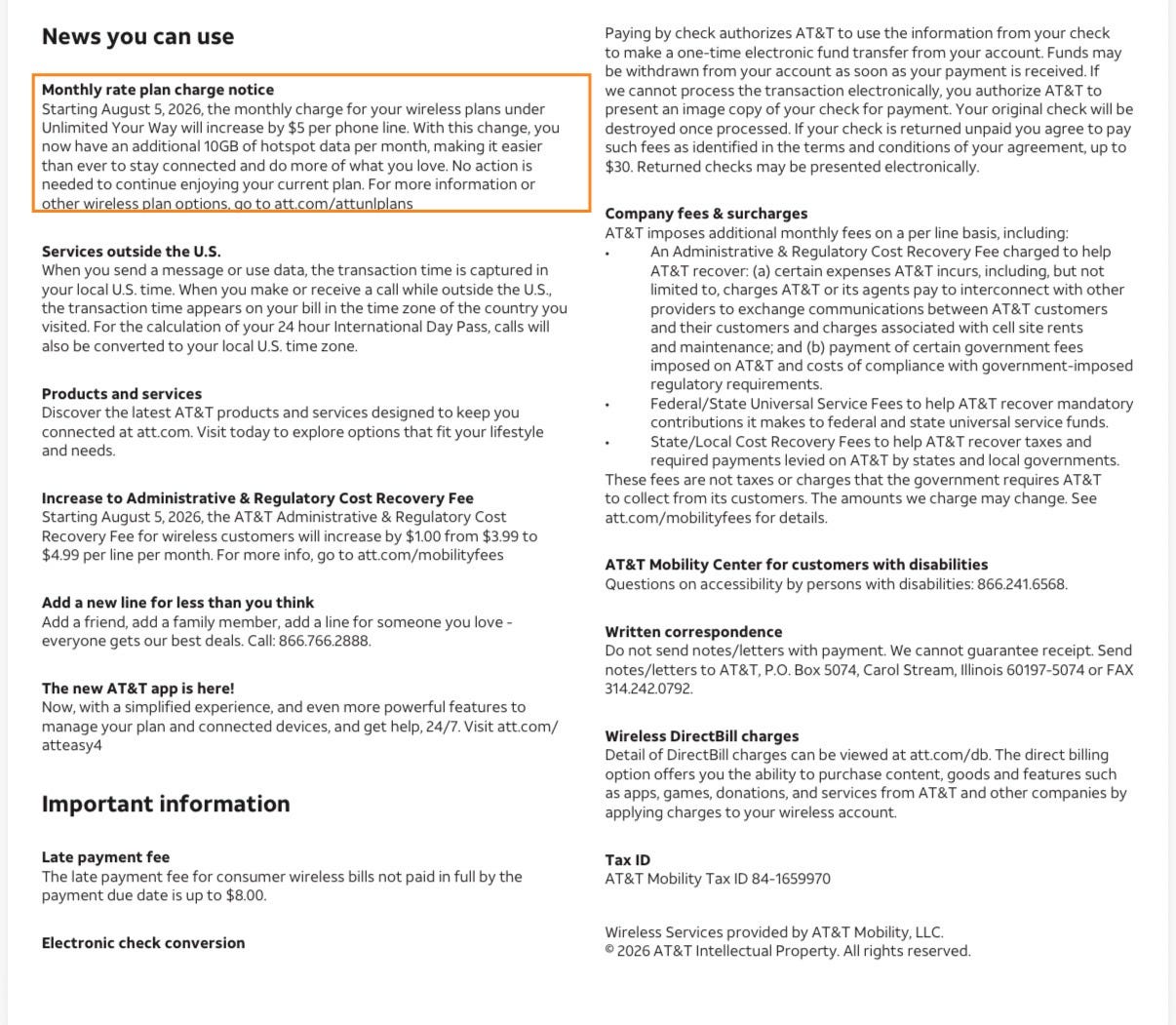
“News you can use” is doing an enormous amount of unpaid legal labor in that document. It is a section designed to be technically true and practically invisible, four pages into a bill nobody reads cover to cover, in a font size that assumes you have both excellent eyesight and nothing better to do on a Tuesday.
Escalation is where the company shows its hand
A lot of brands think escalation means the customer got moved to someone with a better title.
Manager, senior specialist, executive office, retention team. Whatever internal label makes everyone feel like the situation is being handled.
That part barely matters if the person on the other end is only there to repeat the first answer with cleaner grammar.
The useful version of escalation starts with a better question: what did the first answer fail to fix?
In the tree situation, the first rep handled the warranty. That needed to happen. The replacement had to get moving. The escalation handled the part the warranty did not touch: the lost time, the bad packing, the inconvenience, and the fact that I paid for a simpler experience and ended up with a broken product plus another week-plus of waiting.
AT&T did the opposite. The first rep said there was nothing they could do. The executive office called to explain why there was still nothing they were going to do, now with a page number. 🙃
That is a more expensive and high-touch way to annoy someone.
What the complaint was evidence of
The tree company treated the snapped trunk as evidence that something in their process failed. The packaging was wrong, the shipment arrived late, the product showed up broken, and the customer was now doing work he paid to avoid.
They did not treat my annoyance like a mood to manage, rather a signal that the recovery needed to be bigger than a warranty replacement.
AT&T treated my complaint like a customer education problem.
The subtext of “check page 4” was pretty clear: you should have read this already. The price increase existed somewhere in the bill, which meant the company felt covered, and the rest of the call was basically a guided tour through why I had no case.
That is the difference I’d care about heading into BFCM.
Support teams are going to get a lot of complaints over the next few months that are technically messy:
Promo codes that worked exactly as designed and still confused people
Shipping cutoffs that were listed somewhere and still missed
AI answers that technically resolved the ticket and still created a second, angrier ticket
Customers who were warned in the terms and still feel misled because nobody normal reads terms like bedtime material
The question is what your company thinks those complaints are evidence of.
If every complaint is treated like a customer misunderstanding, your team will spend peak season explaining, defending, and pointing people to the place where the company technically said the thing.
If the complaint is treated like a signal, your team can actually learn from it.
The promo language was confusing
The shipping promise created the wrong expectation
The AI flow closed tickets too early
The make-good did not match the miss
The escalation path had no authority behind it
Before BFCM, I’d pull the moments where your team is technically right and customers are still annoyed. Reopened tickets, escalations, promo confusion, AI-resolved conversations that came back, and high-value customers who got the same answer as everyone else.
Then ask what those complaints are being treated as.
A nuisance to close
A misunderstanding to correct
A signal to fix the system
Those three paths create very different customers.
Being right on page 4 does not beat being useful on day one.
And lastly, download the BFCM CX Playbook and review your experience one more time.

That’s it for this week!
Any topics you’d like to see me cover in the future?
Just shoot me a DM or an email!
Cheers,
Eli 💛